A first no-insurance ticket does not by itself bring an SR-22. A second or later conviction is what typically does, and your court papers or DPS letter will say so. Call the number on this page to be connected with an independent insurance agent who serves Rosenberg.
Why drivers get ticketed
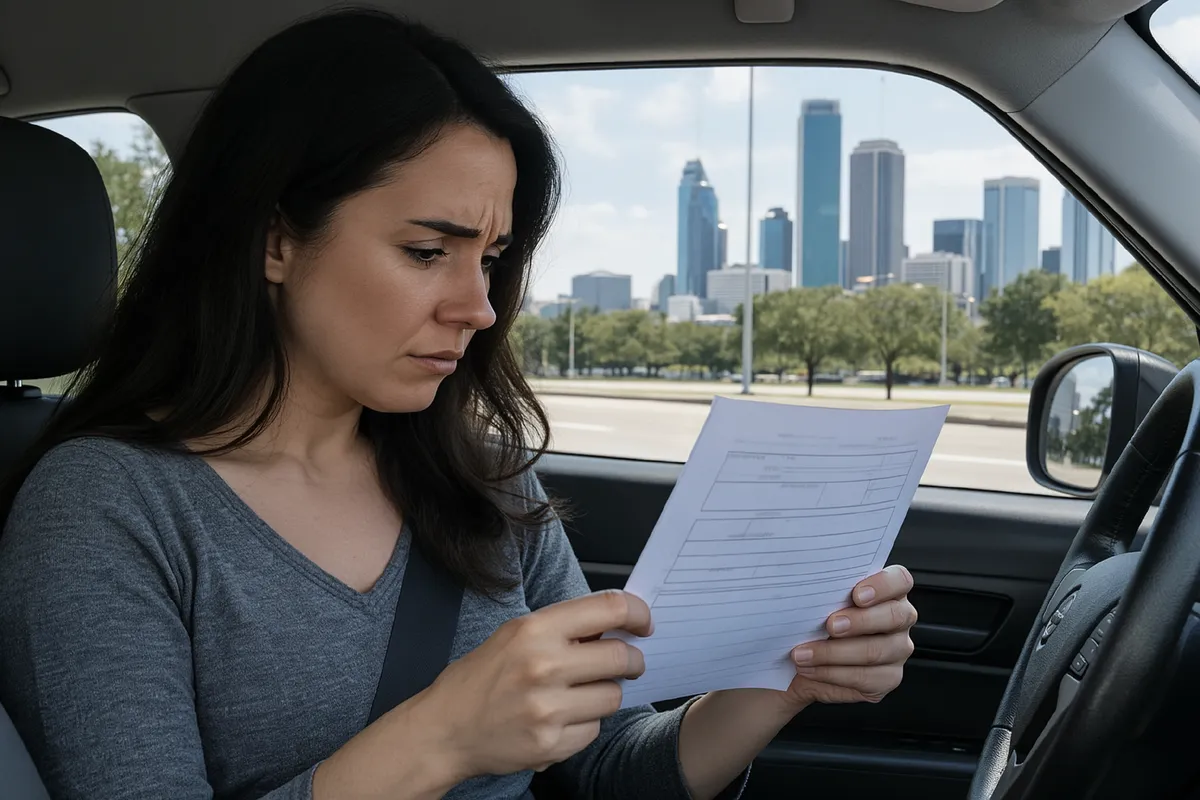
Many no-insurance tickets come from a lapsed policy the driver forgot about, a missed payment or a car just bought. A traffic stop or a minor crash then reveals it. Whatever the cause, the next step is the same: get coverage and read what the ticket requires of you.
Keep every document
- The original citation
- Any court notices or receipts
- Proof of insurance from the new policy
- DPS letters that follow
- Your insurance agent's contact details
- Notes from any calls with the court
A single folder helps if the court or DPS asks questions later on, and it speeds up any call with an agent.
Commuters heading into Houston are on the road every day, so a stretch without coverage after a ticket carries real risk. Getting a policy active promptly matters most.
How an agent helps
- Checks companies that accept drivers with tickets
- Explains owner and non-owner policies
- Requests the SR-22 filing if you need it
- Tells you when coverage begins
- Answers questions about price and payment
- Helps you gather proof of coverage
You decide what to buy, and nothing starts until you agree.
Do not choose on price alone
An offer that looks small at first may carry thin limits or fees added later. Compare what the policy covers, the limits, the payment schedule and any filing charge. Asking an agent to put the options side by side makes the differences much clearer to you before you commit.
What happens next
- You respond to the ticket with the court
- The court decides the outcome
- DPS may send a letter if an SR-22 is required
- The insurer files it once you have a policy
- Watch your mail for a DPS letter
Each step has its own paperwork and its own deadline, so keep track.
Texas SR-22 basics, Rosenberg edition
An SR-22 is proof of financial responsibility that the insurance company sends to Texas DPS. You don't mail it yourself, and the usual requirement is two years of continuous coverage.
A no-insurance or other Class C ticket from a city officer here is handled by the Rosenberg Municipal Court; a misdemeanor DWI goes to the Fort Bend County Courts at Law instead.
For in-person license business, the Rosenberg DPS mega center is the nearest DPS office, with the Gessner Road DPS office as a backup.
The policy behind the filing has to meet Texas minimum liability limits of 30/60/25: $30,000 per injured person, $60,000 per crash and $25,000 for property damage.
A missed payment is the usual way an SR-22 fails: the insurer reports the cancellation to DPS.
Agents who take calls here usually also work with drivers in Richmond, Sugar Land and Needville.
SR22 After a No-Insurance Ticket questions in Rosenberg
Where do I handle the ticket?
Should I get insurance before going to court?
Can an agent tell me if I need an SR-22?
How long does an SR-22 stay on file?
More SR22 services in Rosenberg
SR22 After a No-Insurance Ticket nearby
Helpful guides
Sources
Last updated: